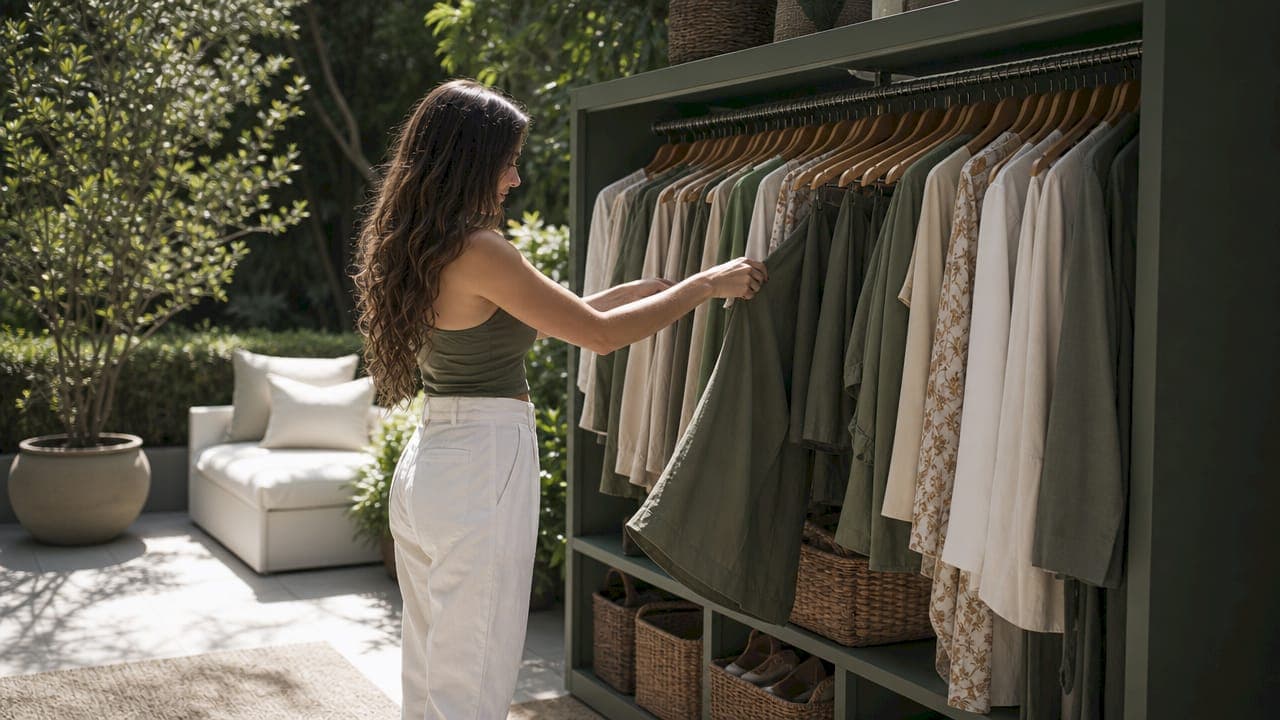
A dream closet design is the art of creating a space that maximizes storage, reflects your personal style, and makes getting dressed feel effortless. In the industry, professionals call this "custom wardrobe design" or "fitted closet planning," and the best results come from treating the closet as a room, not an afterthought. Standard guidelines recommend long-hang clearance of 66–72 inches and shelf spacing of 12–16 inches for folded items. Those numbers exist because a well-planned closet turns your daily routine from a frustrating search into a 90-second activity. Every decision you make, from layout to lighting, either adds or subtracts from that goal.
1. Dream closet design starts with the right layout
The layout you choose determines everything else. A single-wall layout works in narrow spaces and keeps costs low, but it limits storage capacity. An L-shaped layout suits narrow walk-ins by wrapping storage around two walls without wasting floor space.
U-shaped layouts maximize storage in master closets by using three walls, making them the top choice for larger bedrooms. Walk-in closets with islands need substantially more floor space to allow comfortable circulation around the center unit.
| Layout | Best for | Minimum width |
|---|---|---|
| Single-wall | Small rooms, rentals | 4 feet |
| L-shaped | Narrow walk-ins | 5 feet |
| U-shaped | Master closets | 7 feet |
| Island walk-in | Luxury suites | 10+ feet |
- Single-wall: Simple, budget-friendly, easy to reconfigure
- L-shaped: Efficient corner use, good for medium spaces
- U-shaped: Maximum storage, ideal for large wardrobes
- Island walk-in: Adds folding surface and drawer storage at center
Pro Tip: Sketch your layout on graph paper before buying anything. A 1-inch-per-foot scale drawing reveals clearance problems that photos never show.
2. Nail the vertical measurements before anything else
Vertical spacing is the most overlooked part of closet planning. Long-hang sections need 66–72 inches of clearance for dresses and coats. Double-hang sections split that space with an upper rod at 80–84 inches and a lower rod near 40 inches, doubling your hanging capacity in the same footprint.
Shoe shelves need 7 inches of vertical clearance per shelf for flats and sneakers. Boots require 14 inches. Folded clothing shelves work best at 12–16 inch intervals. Getting these numbers right before installation prevents the most common complaint: shelves that are too close together to actually use.
3. Choose storage zones that match how you actually dress
A well-organized closet divides into zones based on how often you reach for things. Daily items go at eye level and arm's reach. Seasonal or rarely used pieces go above or below that zone.
Custom floor-to-ceiling cabinetry delivers a built-in look that modular systems cannot replicate. Experts advise against modular systems in high-end layouts because the gaps, mismatched finishes, and visible hardware undercut the cohesive appearance. Built-in units also anchor to walls, which improves stability and longevity.
Key storage zones to plan for:
- Long-hang zone: Dresses, coats, suits
- Double-hang zone: Shirts, jackets, folded trousers
- Drawer zone: Underwear, socks, accessories
- Shoe display: Angled or flat shelves at seated height
- Display niches: Bags, folded sweaters, decorative items
Pro Tip: Place your most-worn items between knee height and shoulder height. That 18-inch band is where your eyes and hands go first every morning.
4. Add specialty features that separate good closets from great ones
Luxury closets now combine boutique aesthetics with functional features that make daily use genuinely enjoyable. Illuminated jewelry drawers, valet rods, and pull-out belt racks are no longer reserved for high-end renovations. They are available as add-ons to most custom cabinetry systems.
A valet rod pulls out from a cabinet face and holds tomorrow's outfit, which saves time on busy mornings. Illuminated drawers with LED strips inside make it easy to find accessories without pulling everything out. Display niches with glass fronts let you treat your favorite bags and shoes as decor, not just storage.
These features also add resale value. A closet that looks and functions like a boutique dressing room signals quality to buyers and renters alike.
5. Use lighting to make your closet feel like a boutique
Lighting is the single biggest upgrade you can make to any closet. A single overhead bulb creates shadows that make colors hard to read and items hard to find. LED strips inside shelves create even, flattering light across every zone.
A layered lighting plan includes three types:
- Ambient light: A ceiling fixture or recessed lights for general brightness
- Task light: Directional spotlights aimed at hanging rods and shoe shelves
- Accent light: LED strips inside drawers, behind glass doors, or under floating shelves
Lighting is the detail that separates a storage room from a dressing room. When you can see every item clearly and the space feels warm and intentional, getting dressed becomes something you look forward to rather than rush through.
Color temperature matters too. Bulbs in the 3,000–4,000 Kelvin range render fabric colors accurately, which prevents the frustration of choosing an outfit that looks different in natural light.
6. Pick materials and colors that work for your space
White and neutral paint colors maximize light reflection and make small closets feel larger. Darker tones add drama in larger spaces but can make tight rooms feel closed in. The right color choice costs nothing extra and changes the entire feel of the space.
Flooring material affects both mood and maintenance. Wood floors add warmth and a boutique feel. Tile is easier to clean and holds up well in humid climates. Carpet feels soft underfoot but traps dust and is harder to keep clean around shoes.
For cabinet finishes, mixing materials creates visual depth. Matte wood fronts paired with brushed metal hardware feel current without being trendy. Glass-front upper cabinets break up solid cabinetry and add a display element. Leather-wrapped drawer pulls add a tactile luxury detail that costs little but reads as high-end.
7. Measure accurately and check for plumb and square
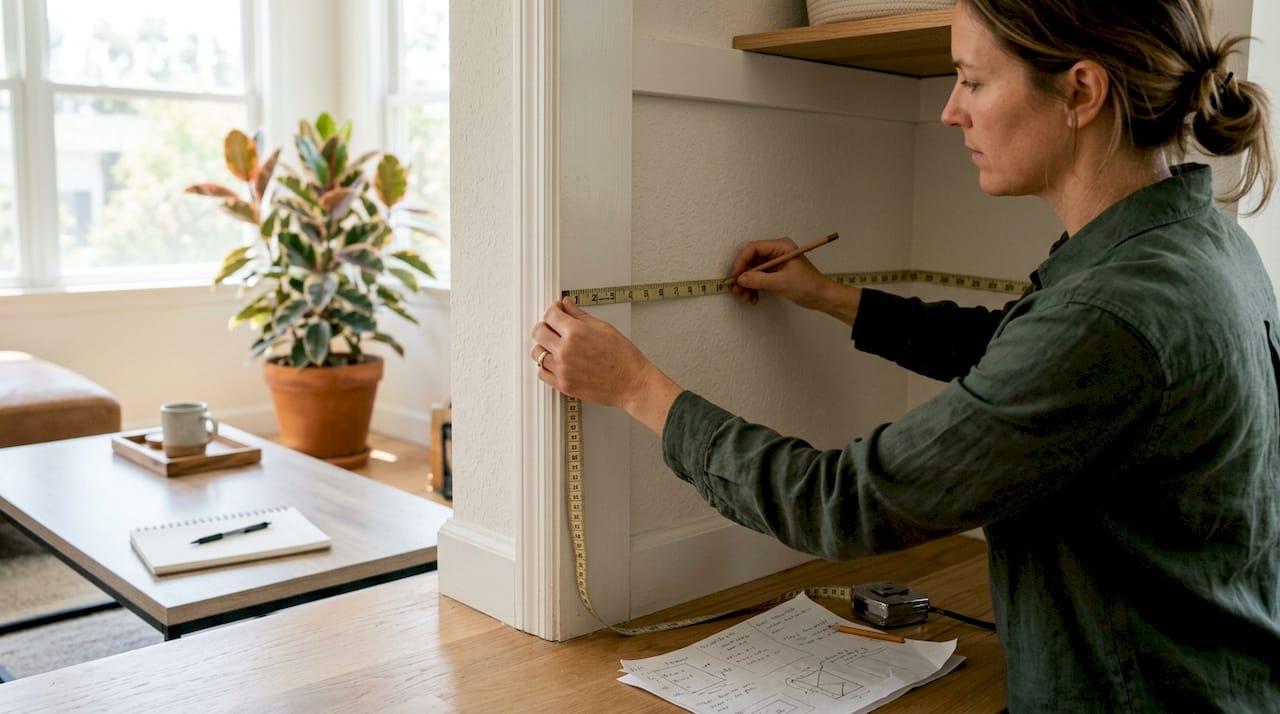
Accurate measurement is the foundation of a successful installation. Professional designers measure room diagonals to check if the room is square. If the two diagonal measurements differ by more than half an inch, the room is out of square, and prefabricated units will need adjustment to fit properly.
Common measurement mistakes include:
- Measuring only at one height. Walls often bow or lean, so measure at floor, mid-wall, and ceiling.
- Forgetting baseboard depth. Baseboards push cabinets away from the wall, reducing usable depth.
- Ignoring ceiling height variation. Older homes often have ceilings that slope or dip.
- Skipping the diagonal check. A room that looks square often is not.
- Not accounting for door swing. A door that opens into the closet can block drawer access.
Pro Tip: Take photos of every wall with a tape measure visible in the frame. You will reference these images dozens of times during planning and installation.
8. Account for doors, drawers, and electrical outlets early
Door swing and drawer clearance need to be mapped before you finalize any layout. A drawer that opens into a door casing is a permanent frustration. An outlet hidden behind a cabinet becomes inaccessible and creates a code issue.
Plan electrical needs at the start of the project, not at the end. Closets with lighting, charging stations, or heated floors need dedicated circuits. Adding outlets after cabinetry is installed costs significantly more than roughing them in during planning.
Mark every outlet, switch, and light fixture on your floor plan. Then overlay your cabinet layout and check for conflicts. This single step prevents the most expensive installation mistakes.
9. Use AI design tools to visualize before you build
AI-assisted design tools have reduced planning time from weeks to minutes. These tools let you input your room dimensions, choose cabinet styles, and see a 3D rendering of the finished space before ordering a single piece.
The practical benefits are real:
- Instant layout testing: Swap between single-wall, L-shaped, and U-shaped layouts in seconds
- 3D visualization: See how lighting and color choices interact with your specific room dimensions
- Error detection: Good tools flag clearance conflicts and code issues automatically
- Material previews: View different finishes and hardware combinations side by side
These tools do not replace a professional designer for complex projects. They do give you a clear starting point and help you communicate your vision more precisely when you do work with a professional.
Key takeaways
A successful closet design requires accurate measurements, a layout matched to your space, and storage zones planned around your actual habits.
| Point | Details |
|---|---|
| Layout drives everything | Choose single-wall, L-shaped, or U-shaped based on room size and storage needs. |
| Vertical spacing is critical | Use 66–72 inches for long hang and 12–16 inch shelf intervals for folded items. |
| Lighting transforms the space | Layer ambient, task, and accent lighting for a boutique feel and practical clarity. |
| Measure diagonals first | Check room square before planning; a difference over half an inch requires adjustment. |
| Custom beats modular | Floor-to-ceiling cabinetry delivers cohesion and durability that modular systems cannot match. |
Why lighting is the detail most homeowners get wrong
I have looked at hundreds of closet designs, and the pattern is consistent. Homeowners spend weeks choosing cabinet finishes and hardware, then install a single overhead light and wonder why the space feels flat. Lighting is not a finishing touch. It is a structural decision that shapes how every other element reads.
The boutique closets that genuinely feel luxurious share one trait: you can see everything clearly, and the light is warm enough to feel inviting. That combination requires at least three light sources, not one. LED strips inside shelves cost less than most people expect and deliver more impact than any cabinet upgrade.
My other strong opinion: skip modular systems if you can afford not to use them. The gaps between units, the visible hardware, and the inability to go truly floor-to-ceiling all signal "assembled furniture" rather than "designed space." Custom cabinetry is a bigger upfront investment, but it reads as permanent and intentional in a way that modular systems never quite achieve. Your closet should feel like it was built for your home, not assembled from a box.
— davens
Havenhome can help you get your closet right
Getting a closet right the first time saves money, time, and the frustration of a redo. Havenhome brings over 10,000 satisfied customers worth of experience to every project, with custom closet solutions designed to maximize your space without requiring a full renovation.
Whether you are working with a small reach-in or a full walk-in suite, Havenhome's approach focuses on your specific storage needs, your daily habits, and the aesthetic you want to live with. Products like the FoldSpace™ Fabric Drawer Bins slot directly into existing cabinetry to add organized storage fast. The result is a closet that works as hard as you do, every single morning.
FAQ
What is the minimum size for a walk-in closet?
A walk-in closet needs at least 4–5 feet of width for single-sided storage. Island designs require 10 feet or more for comfortable circulation.
What height should closet rods be installed at?
Long-hang rods sit at 66–72 inches from the floor. Double-hang setups use an upper rod at 80–84 inches and a lower rod near 40 inches.
How do I check if my closet room is square?
Measure both diagonals of the room. If they differ by more than half an inch, the room is out of square and prefabricated units will need adjustment during installation.
What lighting works best in a closet?
Layer three types: ambient ceiling light, directional task lighting aimed at rods and shelves, and LED accent strips inside drawers and behind glass doors. Bulbs in the 3,000–4,000 Kelvin range render fabric colors accurately.
Is custom cabinetry worth the cost over modular systems?
Custom floor-to-ceiling cabinetry delivers a built-in look and lasting durability that modular systems cannot replicate. For high-end results, experts recommend custom builds over modular alternatives.